
A LinkedIn message sequence is a planned series of direct messages, usually five, sent over about two weeks, where each message has one specific job: open the conversation, deliver value, build credibility, nudge, then make a clear ask. Sequences work because most replies do not come from the first message. They come from the follow-ups that most people never send.
This guide gives you the full 5-message framework, copy-and-adapt examples for each step, the timing that separates persistent from pushy, and the difference between soft-sell and hard-sell sequences. If you want the whole thing generated for your exact offer in about a minute, the free LinkedIn Message Sequencer builds a complete sequence with send timing and personalization tokens, no signup required.
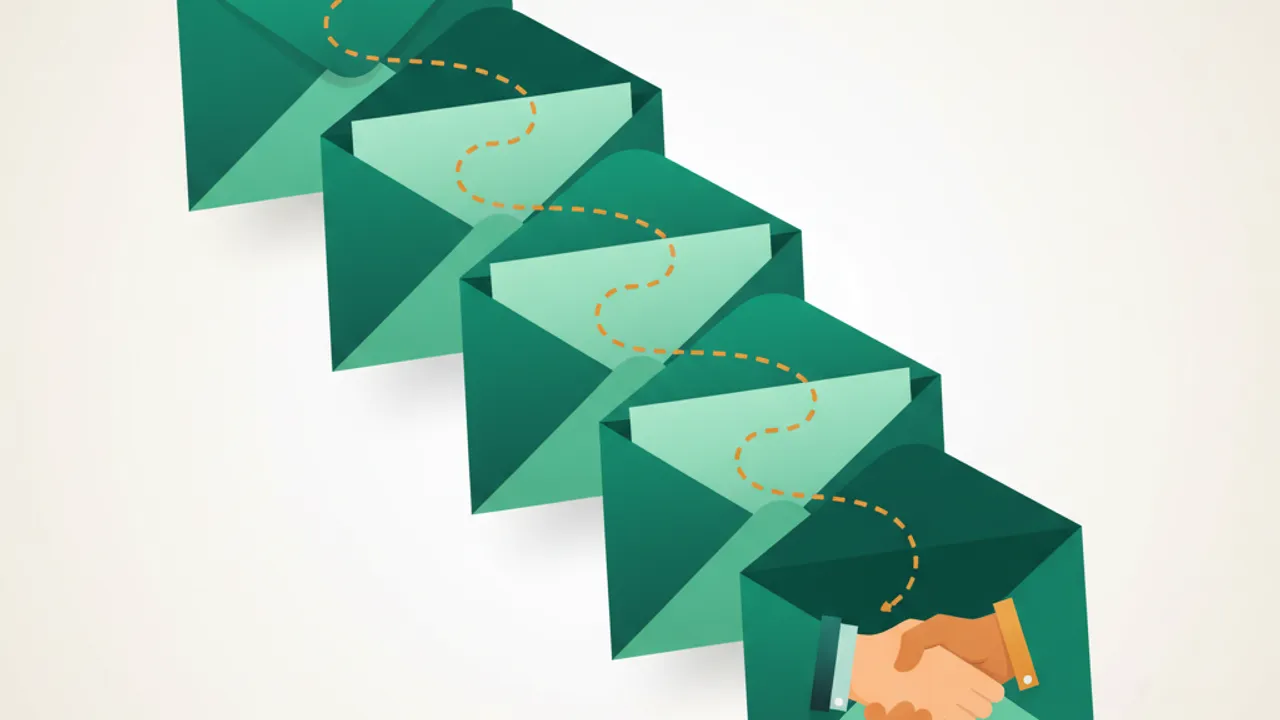
Image: 5-message LinkedIn sequence timeline with send-day spacing
Why One Message Almost Never Works
The typical pattern looks like this: connect, send one generic message, hear nothing, give up. The result is a growing connection count with zero business impact. The problem is rarely that prospects are uninterested. It is that a single message competes with a full inbox, a busy week, and the natural human tendency to think "I'll reply later" and never do.
A sequence fixes all three failure modes at once. It gives you multiple chances to land at a good moment, it lets you demonstrate value before you ask for anything, and it makes following up systematic instead of something you do when you happen to remember. In practice, a large share of total replies arrive from messages two through five, which is exactly the part of the process most people skip. LinkedIn's own Social Selling Index research points the same direction: sellers who consistently engage and build relationships on the platform create significantly more opportunities than those who broadcast and disappear.
The 5-Message Framework
Each message in the sequence has a single purpose. Resist the urge to combine them; a message that opens, proves, and pitches at the same time reads like a template and gets deleted like one.
Message 1: The Opener (within 24 hours of connecting)
Reference how you connected or what made you reach out, and set a conversational tone. No pitch, no link, no calendar invite. Example:
"Thanks for connecting, Priya. Your post on onboarding drop-off matched almost exactly what we kept seeing with trial users last quarter. Curious whether the fix you described held up over time?"
Message 2: The Value Message (2-3 days later)
Send something genuinely useful with no strings attached: a relevant benchmark, a teardown, a resource, or a sharp question about their work. This is the message that separates you from every seller in their inbox. Example:
"Saw your team is hiring two SDRs. When we scaled from 2 to 6 reps the thing that broke first was follow-up consistency, not lead volume. Wrote up the exact cadence that fixed it if useful. Want me to send it over?"
Message 3: Social Proof (3-4 days later)
Now earn credibility: a result, a short case study, or a recognizable name. Keep it to two sentences and tie it to their situation rather than bragging in the abstract. Example:
"One of the fintechs we work with had the same trial-to-paid gap you mentioned. Six weeks after reworking their onboarding emails, activation went from 31% to 47%. Happy to share what changed."
Message 4: The Nudge (3-4 days later)
Short, light, and easy to answer. The nudge exists because people intend to reply and forget. Do not repeat your earlier messages or guilt-trip. Example:
"No worries if this is buried, Priya. Worth a look this quarter, or should I check back after your Q3 push?"
Message 5: The Clear Ask (4-5 days later)
Make one specific, low-friction request and give them a graceful exit. A yes/no question with a bounded time commitment outperforms "let me know your thoughts." Example:
"Last one from me. If cutting onboarding drop-off is on your roadmap, I can walk you through the fintech playbook in 15 minutes on Thursday or Friday. If not, totally fine, and I'll keep enjoying the posts."
Timing: Persistent Without Being Pushy
The full sequence spans roughly 12 to 16 days: opener within 24 hours, then gaps of 2-3, 3-4, 3-4, and 4-5 days. Widening the gaps as the sequence progresses matters. Early messages ride the momentum of the fresh connection; later ones need breathing room so the fifth message feels like a considerate final check rather than harassment. Send during your prospect's working hours, and stop immediately when someone replies, even with a no. A respectful exit today is a warm restart in six months.
Soft-Sell vs Hard-Sell Sequences
Soft-sell sequences lead with questions, insights, and conversation, and keep every CTA low-commitment. Use them for senior decision-makers, high-consideration products, and anyone who did not ask to hear from you. Hard-sell sequences compress the same arc: the offer appears by message two or three, and the CTA is a meeting. Use them when you have a clear, urgent offer and a prospect who plausibly has the problem right now, for example when their company just raised funding or posted the job opening your product replaces.
If you are unsure, default to soft-sell. The downside of soft-selling a ready buyer is a slightly longer conversation. The downside of hard-selling a cold one is a block.
The Mistakes That Kill Sequences
Four patterns account for most failed LinkedIn outreach. Sending the same ask five times in five wordings, which reads as a script. Personalizing only the first message and going generic afterward. Sending links or attachments in the opener, which pattern-matches to spam. And quitting after message two, right before the follow-ups that generate most replies. A fifth, subtler one: running sequences from a weak profile. Prospects click your name before replying, so fix your headline and about section first with the free LinkedIn Profile Optimizer.
Build Your Sequence in a Minute
You can write all five messages by hand with the framework above, and for your ten most important prospects you probably should. For everyone else, the free LinkedIn Message Sequencer generates the complete 5-message sequence for your specific audience and offer, with send timing, personalization tokens to fill per prospect, and a choice of soft-sell or hard-sell mode. Pair it with the Connection Request Generator for the invite that starts the sequence, and the Cold Outreach Personalizer when the conversation moves to email.
Frequently Asked Questions
How many messages should a LinkedIn sequence have?
Five messages is the sweet spot for most outreach: an opener, a value message, a social proof message, a nudge, and a clear ask. Fewer than three and you give up before most replies happen; more than six and you start reading as spam. Space them 2-4 days apart over roughly two weeks.
How soon after connecting should I send the first message?
Within 24 hours of the connection being accepted. You are still fresh in the person's mind and the acceptance itself is a soft signal of openness. Waiting a week turns a warm moment back into a cold one.
Should I pitch in the first LinkedIn message?
Almost never. The first message has one job: start a conversation a human would actually reply to. Reference how you found them or why you connected, then stop. The pitch belongs in message four or five, after you have given something useful and shown credibility.
What reply rate is normal for LinkedIn outreach sequences?
Well-personalized multi-step sequences commonly see 10-25% reply rates, several times higher than one-shot generic messages. The biggest drivers are relevance of the opener, the quality of the value message, and simply following up, since a large share of replies come from messages two through five.
Is there a free tool that builds LinkedIn message sequences?
Yes. GrowthGPT's LinkedIn Message Sequencer is free with no email gate. You describe who you are targeting and what you offer, choose soft-sell or hard-sell mode, and it generates a complete 5-message DM sequence with send timing and personalization tokens you can adapt per prospect.